
How many years does orthodontics last? | Dr. Najmeh Tadredaranjad

Dr. Najme Tadardaran Nejad
مشهدOrthodontic specialist (aligning teeth)
How long is the period of orthodontic treatment?


Table of Contents
Orthodontics is considered a very successful treatment method, and depending on the severity of malocclusion or irregularity of the teeth, orthodontic treatments may be performed in two or three separate stages, which we will explain in detail about these stages and the number of orthodontic sessions.
What will orthodontics help people?
Having straight and tidy teeth is very pleasant and greatly increases self-confidence and self-esteem, and this is one of the thousands of important benefits of treatment and visiting the best orthodontics in Mashhad; Also, this practice can improve proper alignment of teeth, chewing and speaking performance. There are several types of tooth irregularities, some of which we have discussed below:
- Overbite: This irregularity causes the upper teeth to protrude more than the lower teeth or completely cover them.
- Underbite: In underbite, the lower teeth protrude more than the upper teeth, making the chin appear prominent.
- Crossbite: This disorder causes misalignment between the teeth so that the front teeth of the upper jaw are placed behind the front teeth of the lower jaw.
- Overcrowding: Insufficient space created by the jaw, causes the teeth to not be in their correct position and grow improperly or rotate in place.
The above are some of the common irregularities in the teeth that the doctor can use orthodontics to correct.
What are the stages of orthodontics?

Orthodontic treatment, like other treatment methods, has different stages that the doctor determines according to the patient's condition, as well as taking into account important factors such as the age and tolerance level of the person, which teeth should be orthodontic, the time of each of these stages and the number of orthodontic sessions.
The first phase of orthodontics; The planning stage for treatment
At this stage, the doctor must examine each and every important factor and make the necessary plans to start the treatment.
- Medical and dental evaluations:
- Study model (casting, bite harvest):
At this stage, the patient is asked to bite into a dental tray filled with a gel substance that hardens around the tooth. The trays are removed from the teeth and filled with plaster to create models of the patient's teeth. These created models allow the doctor to carefully examine the position of the teeth and how they relate to each other and to estimate the duration of orthodontic molding, which varies depending on the doctor's skill and the patient's problem.
- Panoramic X-ray:
X-ray is a wonderful tool to observe possible complications or previous injuries to the jaw joint. X-rays also allow the orthodontist to see the exact position of each tooth and its corresponding root.
- Photos:
Many orthodontic specialists like to take before, during and after photos of the face and teeth to evaluate the progress of the treatment and the effect of the treatment on the patient's face. After completing the above steps, the doctor will obtain the necessary information to perform orthodontics and will enter a new phase to start the treatment.
The second phase of orthodontics related to the placement of devices
At this stage, all the mentioned diagnostic tools will be used to evaluate the condition of the patient's teeth and jaws. Based on these evaluations, the specialist has recommended a customized treatment plan to prevent orthodontic pain in order to guide the teeth to the right position as gently as possible.
This treatment plan usually includes the use of one or more customized orthodontic devices that can be fixed or mobile. Fixed appliances are usually traditional brackets that are individually attached to the teeth by an archwire.
In some special cases, especially for younger children, removable orthodontic appliances are recommended to facilitate proper growth of the mouth and jaw before starting treatment with fixed braces. All mobile devices must be used by the patient for a minimum number of hours per day in order to obtain the maximum therapeutic result.
Regardless of the type of orthodontic appliance, the specialist must adjust it regularly to ensure that proper and continuous pressure is applied to the teeth. Regular visits to the orthodontist and contact in case of broken or damaged device parts are necessary.

The third phase of orthodontics; Preservation phase
Once the teeth are properly aligned, fixed braces and removable appliances are removed and stopped; The orthodontist will then create a custom retainer.
The purpose of care for orthodontic teeth and the use of retainers is to ensure that the teeth do not begin to move back into their original position. Retainers must be worn for a specific amount of time per day for a specific period of time. During the retention phase, the jawbone is modified around the aligned teeth to completely fix them in the correct alignment.
How long will orthodontics take?
In the initial session of orthodontic treatment, the process of preparing and installing metal brackets (Nagin Orthodontics) on the teeth usually takes between one and three hours. This time includes preparing the teeth for installing brackets and teaching how to observe oral hygiene during the treatment period.
In general, the duration of orthodontic installation will be very variable and depends on various factors such as age, the amount of teeth clutter, jaw and physical condition of the person.
Orthodontic treatment requires patience, patience and cooperation; By following expert instructions and regular visits, you can speed up the treatment process and finally achieve the desired result.
Last words
Orthodontic treatment can be a wonderful and transformative experience for patients who are looking for a more beautiful smile and more self-confidence. Although the treatment steps and the number of orthodontic sessions may seem long and complicated at first glance; But when starting the treatment, the main goal will be to achieve the desired result. During all treatment stages, the orthodontic specialist is with the patient and will provide the necessary support.
Frequently asked questions about the duration of orthodontic treatment
How long does orthodontic treatment usually take?
In most cases, it takes between 12 and 24 months, but for complex cases it may last up to 36 months.
What factors increase the duration of orthodontic treatment?
The severity of the dental or jaw abnormality, the type of orthodontic device, the age of the patient and the degree of compliance with the doctor's recommendations.
Does the type of orthodontic device (metal bracket, transparent, aligner) have an effect on the duration?
Yes — for example, treatment with clear aligners may be faster for simpler issues, but metal brackets may be preferable for complex cases.
Why does the age of the patient affect the duration of treatment?
In children and teenagers, with active bone growth, teeth move faster; In adults, where the bones are denser, more time may be needed.
Does following the orthodontist's recommendations really make a difference?
Yes — regular attendance at appointments, good oral hygiene, and proper use of orthodontic aligners or elastics can make treatment more efficient and shorter.
Can the treatment be completed in less than 12 months in very simple cases?
Yes — in cases where corrections are minor (eg, little room for correction or mild disorganization), treatment may take 6 to 12 months.
After removing the orthodontic appliance, is there anything else that needs to be done?
Yes — a retainer is necessary to stabilize the results; A retainer may have to be used at night for years.
Is orthodontic treatment possible in adults? Is it much longer?
Yes, it is possible; Although the treatment time may be a little longer, but with new technologies, very good results are achieved for adults as well.
About the author:
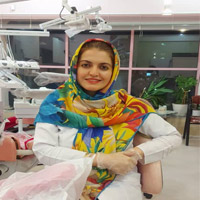
In 1379, I was accepted in the national entrance exam of universities with a distinguished rank (5th rank) in the experimental field and started studying at Mashhad Dental School. During my academic period, I was one of the distinguished students of this faculty and I received many academic awards. And finally, in 2018, by defending my thesis on "The effect of bone growth factor on jaw problems", I managed to obtain a doctorate degree in dentistry and became a member of the country's medical system organization and the World Association of Orthodontic Specialists.
Similar articles

Getting to know the causes of tooth not numb + its solutions
Read the article

What is digital orthodontics? Examining its advantages and disadvantages
Reading the article

Getting to know rabbit teeth orthodontics
Read the article

Introduction to invisible or clear orthodontics; Its advantages and disadvantages
Read the article

Getting to know ways to treat locked jaw
Read the article

Reasons for orthodontic brackets falling off | What to do if it is torn?
Read the article





